Showing posts with label Belfast. Show all posts

Friday, March 17, 2017

MacPherson Sawmill, Eldon /Belfast

     I was up east this afternoon and thought I'd run down to see if the MacPherson's old sawmill was still there.  Here it is on the right - it's hanging on in it's neglected state.  This is the last water-powered mill on Prince Edward Island - the last one of near 400 water-powered mills built on Prince Edward Island between the mid 1700's and 1990.
     I documented this building back in the fall & winter of 2010.  Here's a few photos taken at the time.  
     It makes me sad to think such a structure and the history here is not known to more Islanders - there's been a mill on this site since before the building of the St John's Baptist Presbyterian Church, the oldest church on the Island, built in 1824.

Wednesday, March 1, 2017

MacWilliams Farm, Belfast

     I took these photos of this old homestead on the TransCanada Highway in Belfast yesterday.  Meacham's1880 Atlas shows this property belonging to Robt McWilliams (50 Ac) & Chas. & Jas McWilliams (52 Ac) - today it appears these two parcels are one.  The low roof pitch and style makes me think this is a mid-1800's house.  The house appears to be on the Chas. & Jas McWilliams portion.
     In Cummins 1928 Atlas it show's Jno. R. McWilliams with 110 Ac.  It notes that John is an Ex-Road Master; married to Catherine, with the following children: Marion, Margaret, Bruce, Florence and John.

Saturday, March 7, 2015

Grand Rustico

     I was out to Rustico yesterday morning and took a few photos of old buildings - it's a different perspective with all the snow!
     On my way to Rustico on Church Road just before Rte. 6 intersection the first old building is St. Mark's Anglican Church built in 1841, repaired in 1890 and rebuilt in 1912.
Below: Next, on the opposite side of the road, before the corner, is an old blacksmith shop with trees growing around it.
Below: Once you through the intersection at Route 7 continuing north on Church Road, near the corner is the old St. Augustine Credit Union - today this building belongs to the Friends of the Farmer's Bank and used for storage.
Below: about a kilometer from the intersection at a sharp turn in the road is is the Barachois Inn with St. Augustine Church in the background.
Below:  St. Augustine's Parish Church is the oldest Catholic Church on Prince Edward Island, built in 1838 with the first service on Christmas Eve that year.
Below: next to the church is the Parochial House, built in 1844..
Below: beside and to the east of the Parochial House is the Farmer's Bank of Rustico, built in 1864.  One of few Island Sandstone buildings remaining on Prince Edward Island. 
Below:  Over the past 25 years through the wonderful vision and direction of Judy MacDonald (of the Barachois Inn) and her committee, the Bank has been restored and today houses a museum and meeting space.   Further to the east of the Bank is the Doucet Log House, built in 1772 - possibly the oldest building on Prince Edward Island. 
Below: as you make the sharp turn on Church Road between Barachois Inn and St. Augustine's Church you see the Belcourt Center - the former St. Augustine's Convent.
Below:  the Belcourt  Center was built as St. Augustine's Convent and school in 1882 - following a fire February 1932 the present building was re-built on the original foundation by local Parish volunteers. Today the Belcourt Spiritual Center is used as a retreat center.

Monday, October 31, 2011

Martin Heartz, mason

Every now and then I come across text referring to construction on the Island early in it's settlement - here is one such bit of information:

In 1805 Jacob "Martin" Heartz, ( of Sleepy Hollow) married Ann M. Dawson, an Irish girl from County Caven - they had ten children.  Martin was a very hard-working stone mason and did considerable work around the neighbouring countryside.  Lord Selkirk's Diary of August 15, 1803, contains data about "M. Heartz, mason" and that he built chimneys for the Belfast settlers.

cf. "An Island Refuge: Loyalists & Disbanded Troops on the Island of St. John."  Edited by Orlo Jones and Davie Haslams.  Abeqweit Branch of UE Loyalists Assoc. 1983.  Page 101.

Monday, August 8, 2011

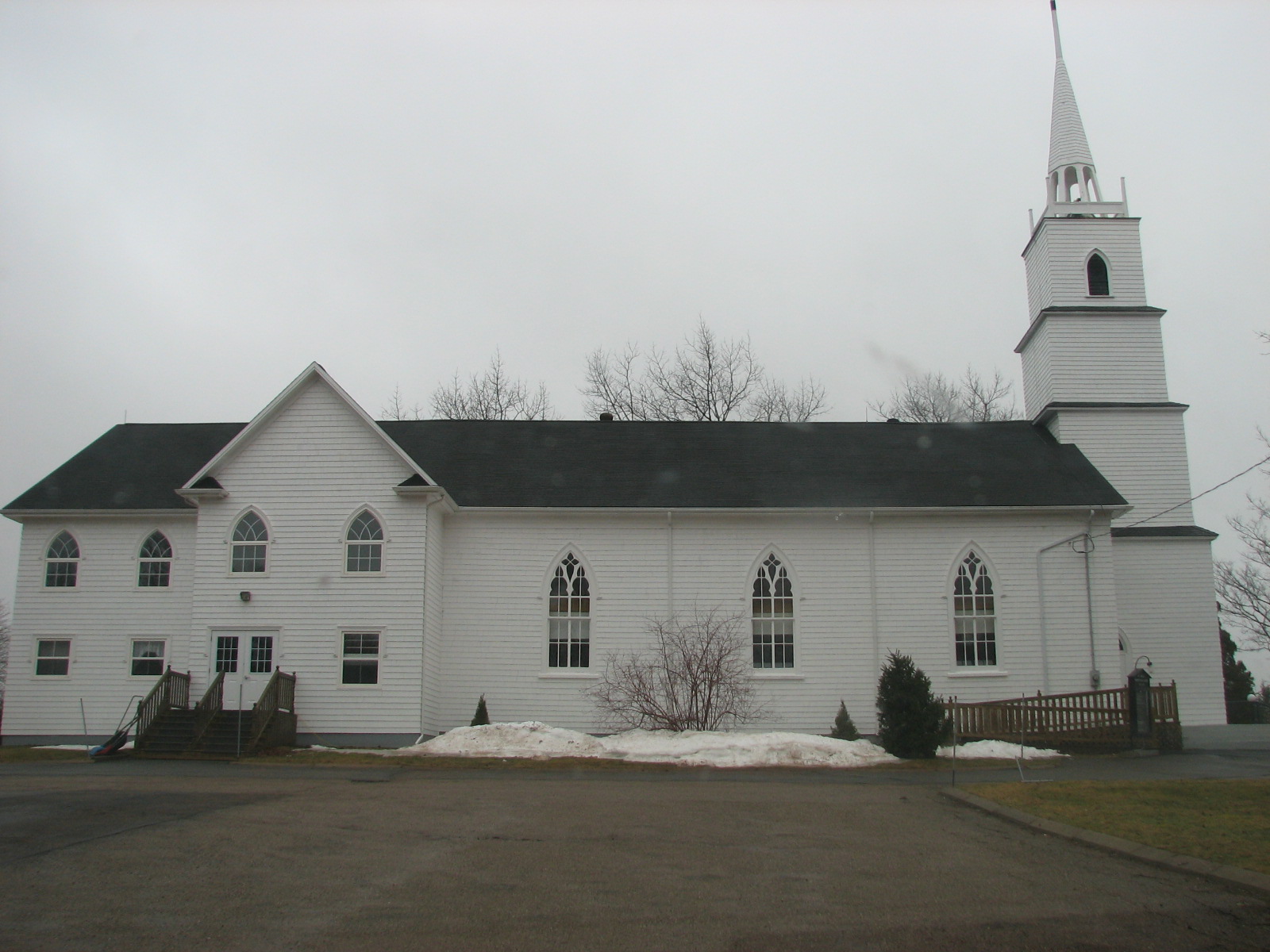
Church of Scotland, Belle River / St. John's Presbyterian, Belfast

Late on Saturday afternoon we stopped into the 147th PEI Highland Games and Scottish Festival at the Lord Selkirk Provincial Park in Eldon, PEI.  This 2-day event is presented by the Caledonia Club of Prince Edward Island.  For years I've been wanting to go out to this festival but never had the chance.  We had perfect weather and the day was beautiful.  The festival consists of the following: annual kilted golf classic; step-dancing competition; Jr. heavy sports demo & competition; Jr. athletics track and field; ladies heavy sports (ie. shot put, sprint, rolling pin toss); men's heavy sports (ie. shot put, sheaf toss, bale toss, Braemore stone, caber toss, farmer's walk; Highland dancing competitions; kilt pace; Belfast Pipe & Drum Band; Belfast Ceili Band; fiddlers and local musicians and performers.
A band of pipers started their performance and march in front of the Church of Scotland then paraded down into the Park grounds - it was moving to witness and to think this has been tradition here for near a-century-and-a-half.

The large provincial park features the following:  campground; golf course and clubhouse; swimming pool; historic Acadian/Scottish cemetery; the Belle River Church of Scotland and the Caledonia Club Crofthouse.  Below: looking over the Belfast Highland Greens Golf Course.
Below:  The Belle River Church of Scotland, built in 1876.  The church was no longer needed and moved in to the park from Belle River in the late 1990's.  The interpreter, Audrey, told us about the historic site and church and the area - she represents the Belfast Historical Society.
Below:  the west /front view.
The church is very simple in design and character.
Below:  the South / right side view.
Below: the East /rear view.
Below:  exterior detailing of window casing and sill.
Below:  opposite to the Belle River Church of Scotland is the entry to the Acadian/Scottish cemetery.  This area was the site of an Acadian cemetery between 1752-1758 and where they likely built their large Catholic church which measured 30'x70'.  The Acadians came here from Nova Scotia and were poor and destitute.  Nearly all these Acadians were deported to France in 1758 on the ill-fated ship "William" - only the Captain, crew and priest survived the sinking of the ship not far from France.
The first Scottish settlers were brought to this area by Lord Selkirk in August 1803 on the ship "Polly" - these settlers were known as "The Selkirk Settlers".  This Acadian cemetery became the resting place for many of those early Scottish settlers and was lost to time and an overgrown with forest until a few years ago when it was cleared and restored to its present state.  The Historical Society was presented with an award for this restoration project.

Those early Scottish settlers established the community we see here today and built their first church in 1824 - St. John's Presbyterian Church, Belfast (see below).  The church was built in the Neoclassical architectural style which resembles the designs of Sir Christopher Wren of London, England.  It was designed and constructed by Robert Jones who kept a detailed journal of his work - the journals survived and remain in the Jones family today.
I took these photos last spring, not this past weekend, although the rain and temperature here today feels more like late fall than mid summer!!
For more information see the following websites: