Showing posts with label Tignish. Show all posts

Tuesday, November 1, 2016

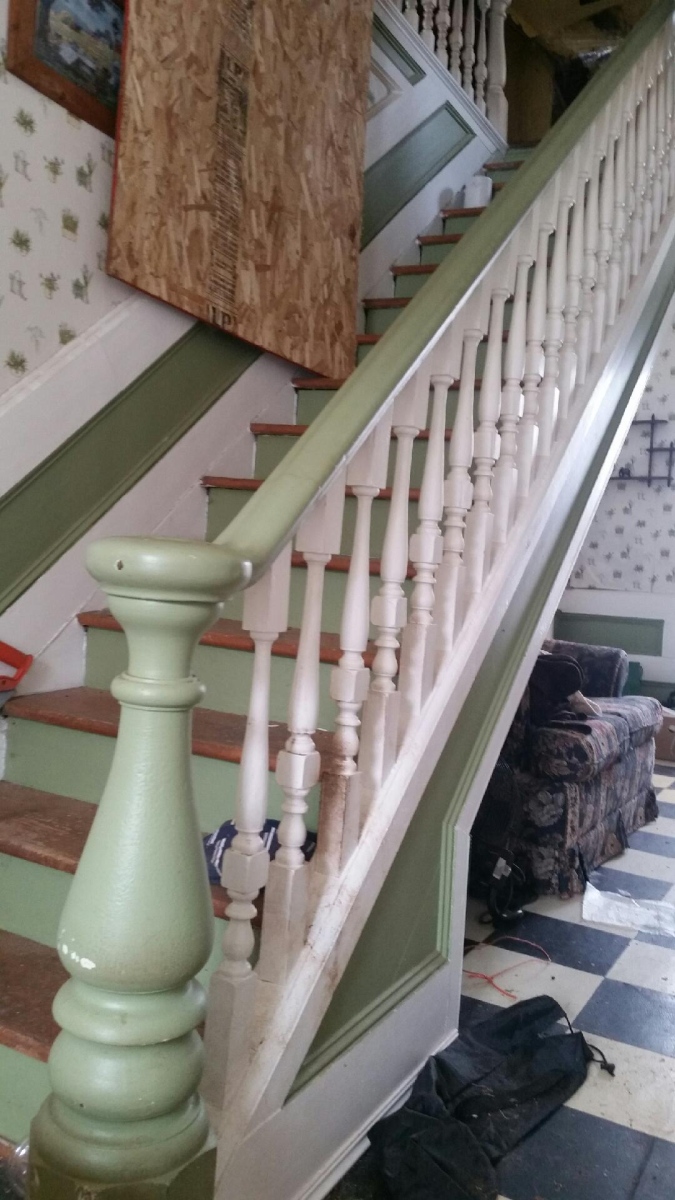
Former Bishop McIntyre/MacFadyan/Cran House, Tignish - Destroyed by Fire!

     OK- this is a bad day!!!  One of Prince Edward Island's more historic homes was destroyed by fire last evening in Tignish! 
     My brother was in this house back in April of this year and took the following photos!  He was back here a couple of weeks ago and bought an old table from the owners.  I was awaiting permission from the owners to document and measure the house for archival purposes!
 
 Below is a painting I acquired last spring of Bishop McIntyre.

Below is a post made on Facebook a few hours ago by Architectural Historian Reg Porter.
THE TRAGEDIES OF HALLOWEEN
     In the 1960s my friend Elizabeth Cran and her children Alison and Anthony and I spent every summer in this huge house managing a long-term project in promoting community culture called the Tignish Arts Foundation. The house had quite a history, having once belonged to Bishop Peter McIntyre who used it for his home when he was parish priest of the area in the 1840-60 period. Later it was bought by a Protestant merchant, Alexander MacFadyen who worked for the Myrick commercial interests. He added on a very large piece on the right and turned the original Georgian house into the new Colonial Revival style. I loved that house and for many years dreamed of it being my home for life. But life had other plans for me. Elizabeth however, did live there for quite a few years.
     Last night, Rose just told me, vandals burned the house down as part of their vile Halloween celebrations. Now all that remains is a framed photo that has all my mature life hung on the wall of my study, wherever I lived. The photo fades but the memories glow.

Sunday, June 7, 2015

Tignish United Church 1893-1973

     I found the following clipping on Norma Deagle-MacPhee's Facebook Page...
Journal Pioneer Newspaper - July 22, 1964
PIONEER SERVICE RECALLS LONG HISTORY OF CHURCH
TIGNISH- A centennial anniversary service honouring the early pioneers of Protestant church history in this part of the province, will be held at Tignish United Church, Sunday, July 26, 1964 at 2:30pm.
            Worship will be conducted by the minister Rev. David S.H. MacDonald, who will also deliver the sermon, Special music will be sung by the Wilmot Church Quartette of Fredericton, N.B.  Henry Clark of Alberton will be guest organist.
            Protestant church history in Tignish dates back 104 years.  The first church building was located one mile south west of where the present church stands.
            Rev. Robert Dyer, the first Anglican clergyman to be settled in west Prince says in his journal that at Little Tignish a church was
built by the Episcopalians, Baptists, Presbyterians and Methodists and that he himself had the pleasure of opening the new church.  The year would be either 1860 or 1861.
WEST CAPE CIRCUIT
            Rev. Allan Fraser, minister of Alberton Presbyterian Church from 1855-1870 had under his care an area extending from Tignish to West Cape and in the years of Tignish congregation were Alexander Stewart, Thomas Haywood, Mrs. Josiah Hamill, Thomas Barbour, Mr. and Mrs. James Haywood, Daniel Miller, Alexander MacLeod and Carlyle Bell.
BUILT IN 1893
            Erection of the present edifice was completed in 1893 and on July 2 of that year was dedicated.  Communion at the afternoon service was conducted by Rev. James Murray assisted by Rev. David Sutherland of Charlottetown.
            The land on which the new church was built was a gift of Mrs. Benjamin Haywood (nee Elizabeth Rodd)  So far as can be learned the building was erected by J.M. Clark and Co. of Summerside.  One of the carpenters in its employ at the time was Hensley Stavert who later became a Presbyterian minister. Bricks used for the foundation and flue were manufactured by Francis O. Hughes who operated a kiln just outside the village.
            Ministers who served the congregation in Tignish were Rev. George Fisher 1884-1889; Rev. James Murray 1891-1895; Rev. A.D. MacDonald 1894-1903; Rev. W.A. MacKay 1905-1908; Rev. J.H. MacNattie 1909-1913; Rev. Emmanuel Lockhart 1914-1920; Rev. T.L. Williams 1921-1923.
SINCE CHURCH UNION
            At the time of church union in 1925, a rearrangement of congregational boundaries resulted in Tignish becoming a part of Alberton Pastoral Charge.  It’s ministers since then have been Rev. J.R. Miller 1926; Rev. A.S. Weir 1926-1934; Rev. George Ross 1934-1936; Rev. M.K. Charman 1936-1941; Rev. G.N. Somers 1941-1943; Rev. Murdock Fraser 1943-1948; Rev. P.A. Fitzpatrick 1948-1951; Rev. A.R. Wallis 1951-1954; Rev. Murray Gardiner 1954-1956; Rev. J.M. Sproule 1957-1958.
            The charge was without a minister for eighteen months and during this period it was served by Elmer MacLean a laymen who is now studying for the ministry.
            Rev. J.A. MacIntosh was minister in 1960-1961.  The present minister Rev. David S.H. MacDonald was inducted as minister in July 1962.
            About 18 years ago the exterior of the church was repaired and painted.  In 1959 the interior of the church was completely redecorated.
            In preparation for pioneer Sunday the interior of the church and grounds around the church have received a major clean-up.  Within the past few years a number of gifts in honor of loved ones departed have been presented and dedicated.
            Tignish Protestant Church began as a community church with its people of several denominational traditions working together to foster and promote the Christian spirit.  After a century of service it is apparently still a community church proud of honour and pay respect to the early Pioneers who kept faith.
_________________________________
           Below is an excerpt about the church from UPEI: Island Lives
Methodists, Bible Christians And Presbyterians In Prince Edward Island:  Campbellton-Miminegash. 1984.  Warren W. Goss. Williams & Crue. Page 53.
            "TIGNISH — To the people of Tignish, Church Union was nothing new. The first church in their community was built in 1861 by Episcopalians, Baptists, Presbyterians and Methodists. Use of this little church was discontinued in 1893 when a new one was built by the Presbyterians. This church also became a community one. In 1973, the building was turned over to the village of Tignish to be converted into a museum."
_________________________________
            The church that preceded the above church was built just outside Tignish on the Christopher Road on the south side of Little Tignish River.  Rev. R.W. Dyer officially opened the church in January 1860 as noted in his journal excerpt below.  He called it "Omnibus Church".  I've never been able to find references to this church name - it might have been called something else.
          "January 29, 1860... After the Morning Service, I took some refreshment and started off to Tignish to hold Service in the new church.  I was not a little gratified to have the pleasure of opening this new building, especially as it has been built by all denominations, namely, Episcopalians, Presbyterians, Wesleyans, Baptists.  Service commenced at 3 o'clock with singing, and then commenced our beautiful Service, and a sermon, Exoduc 20, and the 24th verse, which I had partly prepared for the purpose.  After the Service we sang the evening hymn and closed the service of the day which was, I believe, enjoyed by the whole congregation.  This is the first time since I came to this Mission that I have had a church in which to conduct services or to preach.  it seemed a comfort and a great pleasure.  if there should have been one soul born again at the service, it was but the place of the (re)birth of one sinner, besides a pleasure, what a mercy.  "Laus Deo."  After the service I went to see Mrs. Platts..."
            Below:  Photo of the former Omnibus Church site, the church is long gone - only a few stones remain in the cemetery - it's all grown up around it.

Monday, November 3, 2014

Parish House, Notre-Dame-du-Mont-Carmel, 1903

     The following is further information to the previous post about the parish house at Notre-Dame-du-Mont-Carmel.   Thanks to Georges Arsenault for the sending along the following article published in 1903.  He notes the house has been vacant now for a number of years and its future uncertain.


"Échos de Mont-Carmel"
published 9 July 1903 in the Moncton newspaper L'Évangéline
Après la magnifique église en brique qui a été bâtie comme par enchantement, le Père Arsenault a fait bâtir un presbytère qui est sans contredit  le plus magnifique de ce genre qu'il y ait dans tout le diocèse. Cette structure en brique est de 45 x 40 pieds, à deux étages. La façade offre un coup d'oeil des plus charmants. On arrive à la porte principale en franchissant plusieurs degrés. En entrant on trouve, à la droite, une magnifique chambre finie dans les derniers goûts. Cet appartement occupe la moitié du premier étage. À gauche se trouvent une autre chambre spacieuse et la salle à manger.

Arrivé au second étage on rencontre un corridor qui traverse la bâtisse d'un côté à l'autre. Du côté qui donne sur le détroit est la chambre épiscopale. Un balcon érigé en dehors s'élève jusqu'au 2me étage, d'où l'on obtient un magnifique coup-d'oeil sur le détroit et les rives opposées.

Deux tourelles, une chaque côté de la porte d'entrée, s'élèvent à la hauteur du toit. Entre ces deux tourelles est un balcon, ainsi qu'un autre qui est plus spacieux du côté qui donne sur l'église.

Le presbytère est chauffé à la vapeur et contient tous les appareils en usage selon le système moderne. De tout en tout, le presbytère et l'église de Mont-Carmel sont des monuments qui font honnneur à l'énergique pasteur et aux braves paroisisens. 
 Presbytère Mont-Carmel, vers 1903
( The Acadian Museum has the original framed picture of the presbytery - this image
was scanned from the 1998 publication for the 100th anniversary of the church. )
* * * * * * * * * * * * * * * * * * * * * * * * * *
     The following is a translation to English of the above article by Google Translate...
"Échos de Mont-Carmel"
July 9, 1903 L'Évangéline, Moncton
     After the beautiful brick church was built as if by magic, Father Arsenault has built a rectory which is arguably the most beautiful of its kind there throughout the diocese. This brick structure is 45 x 40 feet, with two floors. The front offers a look more charming. We arrive at the main gate by crossing several degrees. On entering there is to the right, a beautiful finished room in the latest tastes. This apartment occupies half of the first floor. At left is another spacious room and dining room. 
     Arriving on the second floor a corridor through the building from one side to the other are encountered. Side overlooking the strait is the Episcopal room. Balcony erected outside rises to 2nd floor, where a magnificent sight obtained of the strait and opposite sides. 
     Two towers, one on each side of the front door, stood at the height of the roof. Between these two towers is a balcony, and another that is larger on the side that faces the church. 
     The rectory is steamed and contains all devices in use according to the modern system. All in all, the rectory and the church of Mount Carmel are monuments that honor the energetic pastor and brave parishioners. 
* * * * * * * * * * * * * * * * * *
     Here also is a picture of father Pierre-Paul Arsenault (1867-1927) who had the church and the presbytery built at Mont-Carmel.
( thanks Georges Arsenault for this information )
      ARSENAULT, PIERRE-PAUL (baptized PeterArseneaux), Roman Catholic priest, educator, farmer, and folklorist; b. 18 May 1867 in Tignish, P.E.I., son of Sylvain Arsenault and Tharsile Bernard, d. 22 Nov. 1927 in Mont-Carmel, P.E.I.
     Pierre-Paul Arsenault was one of the prime movers of the Acadian community in Prince Edward Island early in the 20th century. One of ten children in a family of modest means, he grew up on a small farm and attended the local school. In 1884, through a bursary established in 1877 by Father Sylvain-Éphrem Perrey*, he was able to enrol at the Collège Saint-Joseph in Memramcook, N.B. While there, he distinguished himself not only by academic brilliance, but also by participation in sports and cultural activities. He was in turn treasurer, president, and secretary of the Société Saint-Jean-Baptiste, which promoted French language and culture within the bilingual institution. Having completed the classical program in 1889, he stayed on at the college, teaching and studying theology. He finished his theological course at the Grand Séminaire de Québec, where he was ordained on 5 Nov. 1893.
     Immediately after his ordination, Arsenault returned to his native parish, where he remained for nearly a year as assistant priest. He then moved to St Dunstan’s parish in Charlottetown; his service as assistant priest there lasted until October 1896, when he was appointed curé of the small Acadian parish of Notre-Dame-du-Mont-Carmel. He held this charge for the rest of his life. Because of his appealing and dynamic personality, he soon succeeded in bringing the parishioners together and carrying out major projects, including the erection of one of the most remarkable churches in the province, a neo-gothic structure designed by Quebec architect René-Pamphile Lemay.
     Like many parish priests of the day, Arsenault worked a farm where he put into practice the best techniques of the day, and it served as a model for the farmers of his parish. To promote the agricultural movement, Arsenault also took part in local organizations. He played a key role, for example, in setting up the Prince Edward Island Co-operative Egg and Poultry Association in 1914, and was its first president. This cooperative, which brought together the many Egg Circles throughout the Island, sought to maintain the quality of the produce and to obtain a good price for its members, for whom the sale of eggs represented an important supplementary income.
     The causes dearest to Father Arsenault’s heart were education for Acadians and promotion of the French language. At the local level, he ensured that the schools were well run and he personally helped the most promising students prepare for the provincial Board of Education examinations and continue their studies at college. In 1900 he set up a library of French books and, in order to emphasize the importance of speaking the language well, he produced plays.
     Arsenault also was active as an educator within the Association des Instituteurs Acadiens de l’Île-du-Prince-Édouard [see Joseph-OctaveArsenault*]. From 1897 to 1927 he took part in its annual conventions, in particular by giving lectures on teaching methods, the benefits of reading, the art of public speaking, and the importance of having a thorough grasp of Acadian and Canadian history. Several times he served on its committee for choosing school textbooks in French, which then had to be submitted to the Board of Education for approval.
     Father Arsenault is said to have been the chief founder of the Société Saint-Thomas d’Aquin, which was established in 1919 on the occasion of the annual convention of the Association des Instituteurs Acadiens. The new organization’s primary aim was to raise money for promising candidates to study at college or university. Arsenault served as vice-president (1919–20) and president (1920–25) of this society, which played a preponderant role for the Island’s Acadian and francophone community, becoming its chief institutional voice.
     As a student at the Collège Saint-Joseph, Arsenault had associated with a few professors who were trying to make the history of the Acadians better known and who advocated the preservation of their oral and material heritage. One of these was Father Philéas-Frédéric Bourgeois*. It was probably through his influence that Father Arsenault, with the help of Father Théodore Gallant, a musician, collected traditional songs from older people in the Acadian community, including versions from the French repertoire as well as local compositions. These 130 pieces constitute the earliest collection of Acadian folksongs. In 1924 Senator Pascal Poirier*, to whom Arsenault had given his collection, turned it over to Marius Barbeau* of the Victoria Memorial Museum in Ottawa.
     Arsenault also drew up the genealogies of the founding families of the parish of Notre-Dame-du-Mont-Carmel and published them in 1912. He preserved a number of farm implements and domestic appliances which are now part of the collection of the Acadian Museum of Prince Edward Island at Miscouche.
     Pierre-Paul Arsenault’s health had been deteriorating for several years and he died at the age of 60. An enlightened leader and pragmatist with widely varied interests, he was one of the outstanding leaders of the Acadian community in Prince Edward Island. With his engaging personality, he was able to win the respect and admiration not only of his compatriots, but of all Islanders. The Summerside Pioneer, announcing his death on its front page, commented, “The whole province has sustained a heavy loss.” In the Mount Carmel cemetery, where he was buried, parishioners erected a magnificent monument in the form of a chapel, a fitting memorial for this man “of far-ranging and lofty ideas.”

Wednesday, July 23, 2014

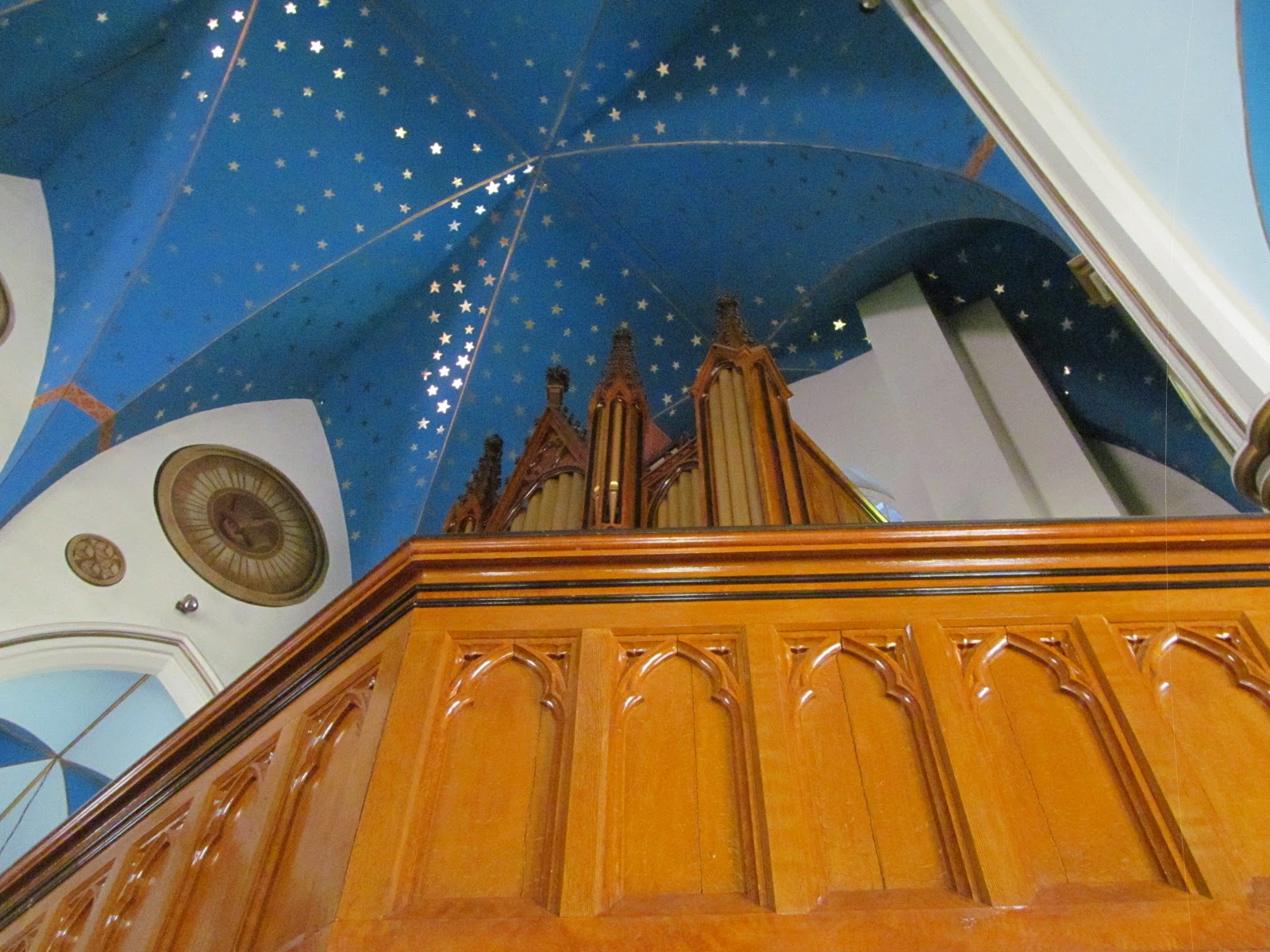
St. Simon and St. Jude Parish Church - Interior photos

     The interior of St. Simon and St. Jude Church is awe inspiring.  The blue ceiling is brilliant with gold stars - you can't stop looking up.  The interior was painted by Cathedral Painters of Nova Scotia in the 1990's.
     Also during the restorations in the 1990's a replica of the original altar was built.
     There's also an 1882 Louis Mitchell (Montreal) Organ in the church - during summer months recitals are held regularly. http://www.cbc.ca/news/canada/prince-edward-island/1880s-pipe-organ-being-restored-1.1055305
       St. Simon and St. Jude church is a must visit - well worth the drive from anywhere on Prince Edward Island!
Below are photos from the Side Chapel.

Thursday, July 3, 2014

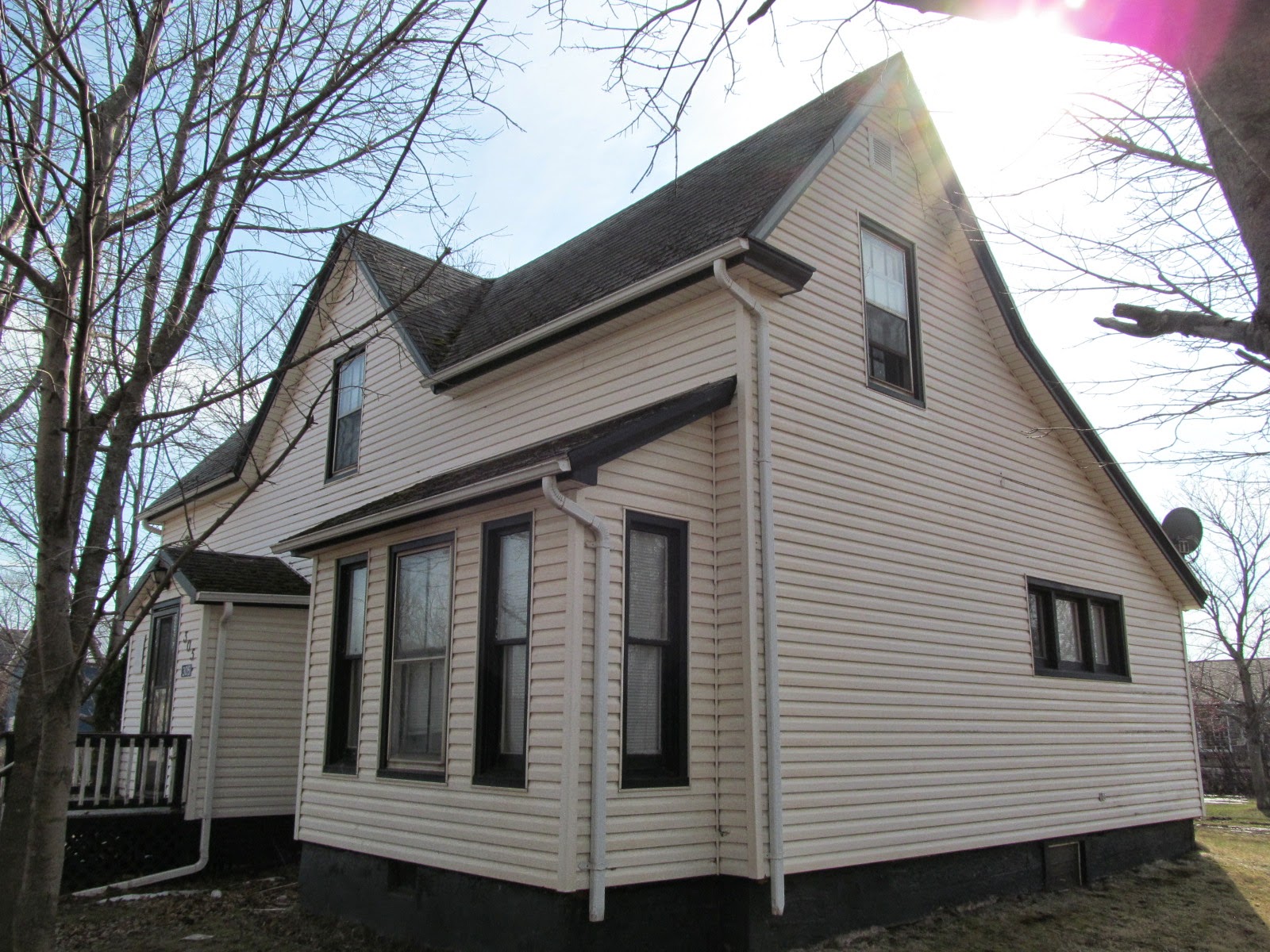
Buote House, Tignish - Demolished

     I was in Tignish the other day and saw this old house has disappeared from the landscape of community.  It was located on Church Street (Rte. 160) between The Co-op and St. Simon St. Jude Catholic Church.
     This house was a prominent building in the community for alot of reasons including it was once a doctor's office.
     I had an opportunity to measure and photograph this house on March 22, 2012 for an anticipated renovation, however, the project didn't go ahead.  Here are the photos I took that day.